The most obvious difference between the two is the hull form. A monohull has one main hull, while a catamaran has two. It sounds like a simple distinction, but it shapes nearly every part of life on board — from how much room you have at breakfast to how well you sleep at anchor.
The hull form and what it changes
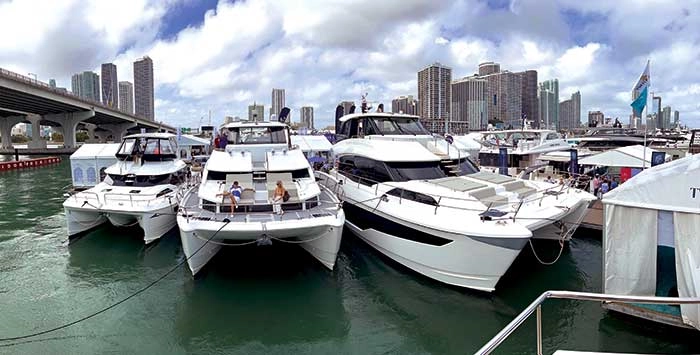
A monohull carries its volume below the waterline, in a single deep hull. A catamaran spreads its volume across two slender hulls connected by a bridgedeck. Because the weight sits further apart, the platform resists rolling instead of absorbing it.
Space and volume on board
For a given length, a catamaran is usually significantly wider. That beam is what creates the sense of space owners notice first when they step aboard.
Interior layout
The wide bridgedeck allows an open saloon on one level, with the galley, dining and seating areas connected rather than stacked. Cabins sit in the hulls, which naturally separates sleeping areas from social ones.
Deck areas
Outdoor space grows in the same proportion. Wide side decks, a generous foredeck lounge and a full-width aft cockpit give guests somewhere to spread out instead of competing for the same seat.
Motion and stability
The twin-hull platform reduces rolling, and the difference is most noticeable when the yacht is stationary. At anchor, a catamaran stays level while a monohull tends to roll with passing wakes and swell.
- Less rolling at anchor, which matters most at meals and overnight
- A flatter, more predictable ride underway
- Fewer handholds needed when moving around the yacht
- Easier boarding from a tender or dock
Handling and manoeuvring
With one engine in each hull set far apart, a power catamaran turns on its own axis using engines alone. In tight marinas that often removes the need for a bow thruster and makes berthing calmer for a short-handed crew.
Draft, range and anchorages
Twin shallow hulls draw less water than a comparable monohull, which opens up bays, coastal routes and anchorages that would otherwise be out of reach. Combined with efficient cruising at moderate speeds, this widens the map of places a season can include.
“Owners rarely describe the difference in technical terms. They talk about sleeping better, cooking underway, and using the whole yacht instead of one corner of it.”
Which one suits you
A monohull still offers a more traditional yacht feel, with deeper motion through the water and a narrower profile in the marina. A catamaran feels more like a private floating residence: broad, steady, and built around time spent on board rather than time spent getting somewhere.
If your cruising is about long stays, guests and comfort at anchor, the catamaran platform answers that brief directly.


